Pulse
Social impact organizations did not know what resources to allocate where. Their reporting systems were built for donors, not for the people driving support in the field. I built a platform that fixed both problems at once.
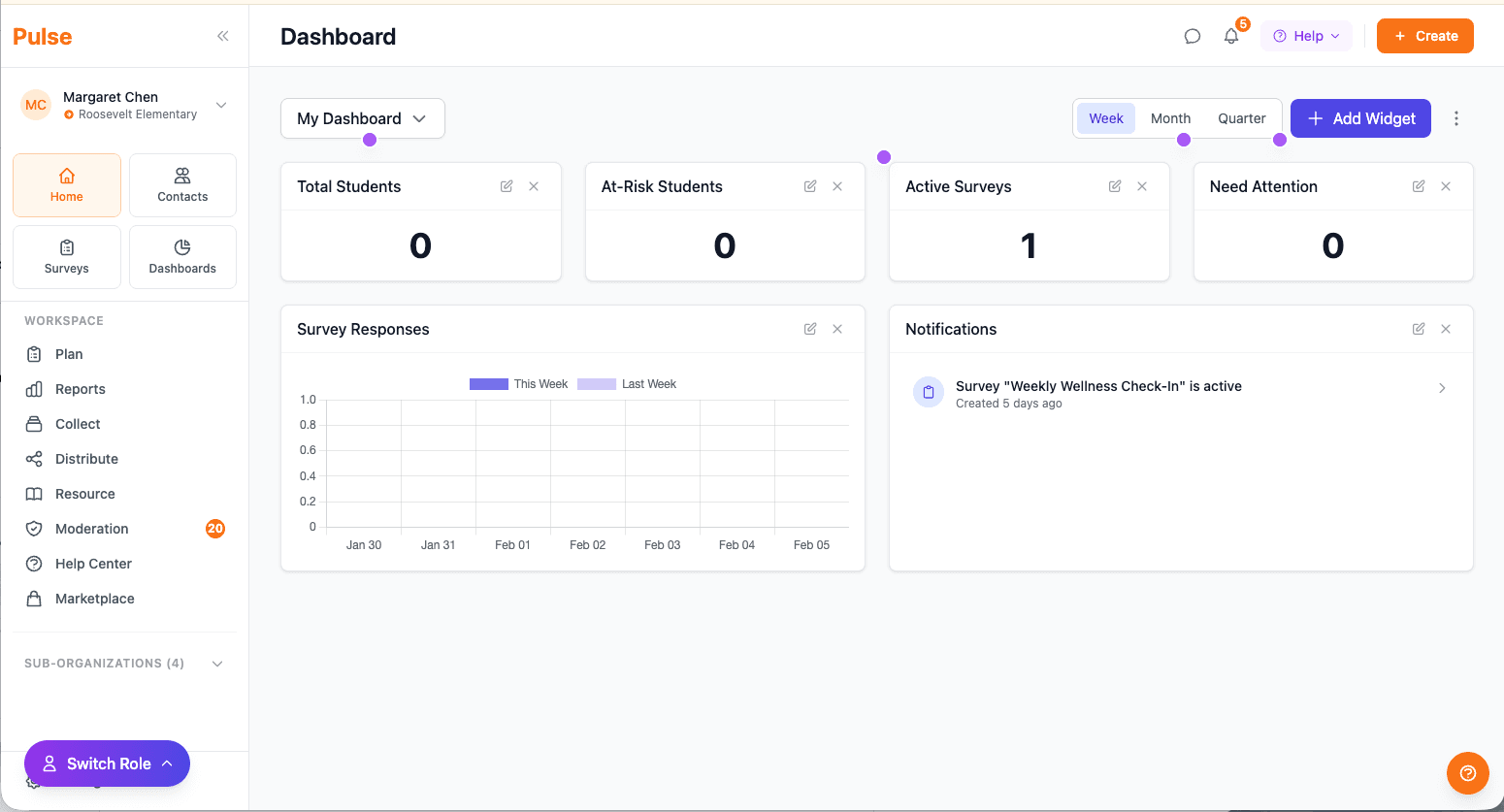
Platform dashboard
What I walked into
Every organization I worked with in the social impact space had the same data problem. Five team members would report on the same individuals. No deduplication. No single source of truth. The same person showed up in three different spreadsheets with three different spellings of their name and three different assessments of their situation.
Their tools were form builders. Collect data, export to a spreadsheet, write a report. The report went to the people writing the checks. It never went back to the people in the field who needed it to make decisions.
They were measuring outputs. Never outcomes. Outcomes are hard and take time, so nobody did the work to track them.
What I saw
The reporting problem was not a technology problem. It was an audience problem. Reports were written for philanthropists and grant committees. They were designed to prove that money was being spent well. That is a reasonable thing to prove, but it created a system where data flowed in one direction: upward.
Field operators needed data flowing back down. What is actually happening with this family over time? What changed since last year? Where are the gaps in our plan? What worked?
It is nice to turn to a philanthropist with a comprehensive report. But that was never our intention. Reports get written to the people writing the checks, not to the people driving support in the field.
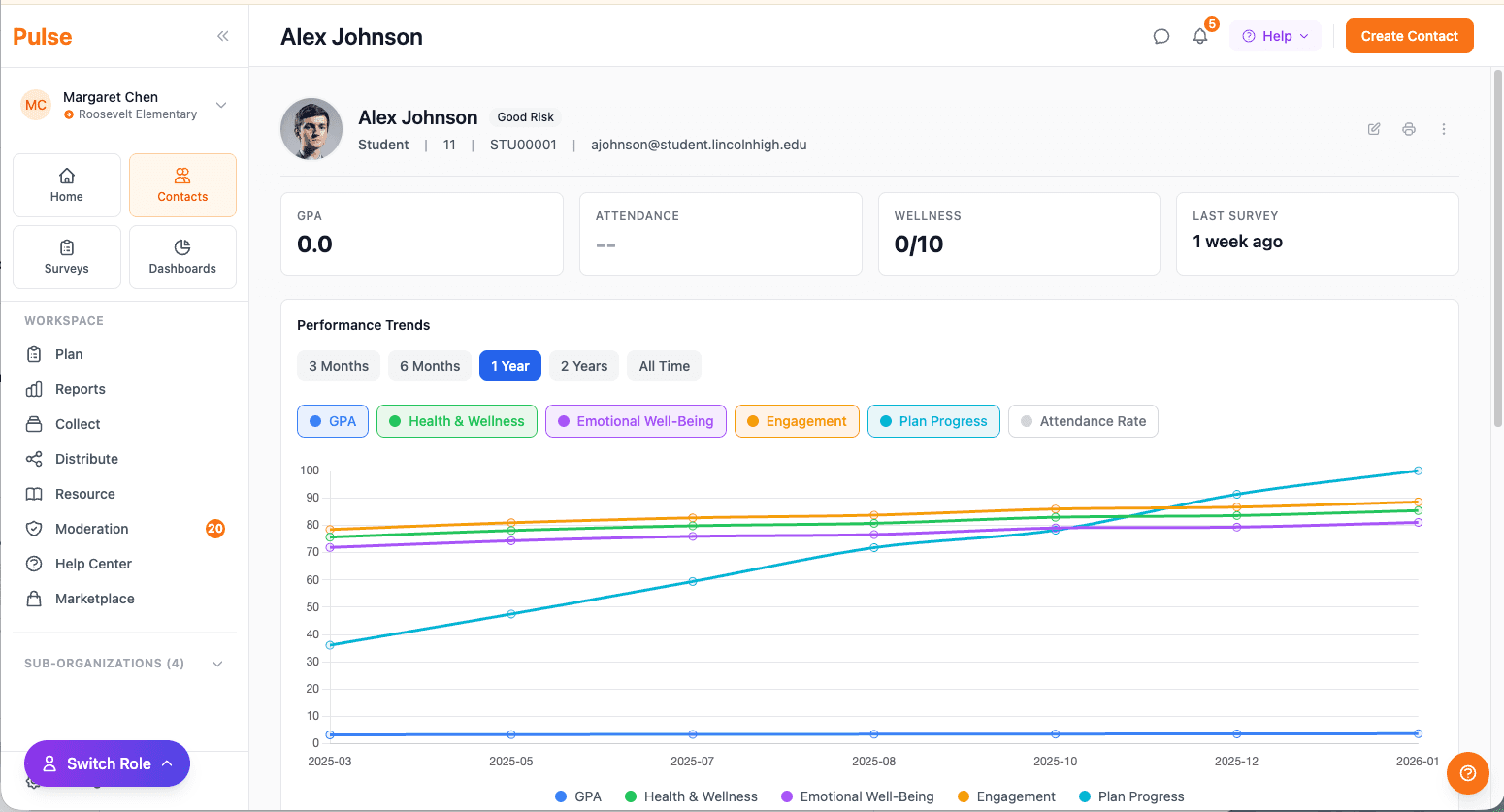
Individual student profile
How I approached it
I built for the field team first. Individual tracking over time. Not snapshots. Narratives. What was true when things started, what unfolded over months and years, what shifted. The kind of longitudinal view that lets a case worker walk into a meeting and actually know what is happening.
Deduplication became foundational. One person, one record, no matter how many team members interact with them. Community-level grouping so you can see families and neighborhoods, not just isolated individuals. Targeted plans connected to real resources, not just documented goals.
The platform needed to cultivate narrative over long periods. Most tools in this space are designed to capture a moment. I needed something that could hold a story.
Longitudinal tracking
Individual records that build over time. Not forms. Narratives. What was true at the start, what unfolded, what shifted. The full arc.
Resource-connected plans
Targeted plans linked to a resource library and a marketplace for service providers. Not goals on paper. Plans with actual next steps attached.
Field-first reporting
Data flows back to the people who need it. Donor reports still get generated. But the primary audience is the team in the room making decisions.
What we built
The full scope: individual tracking over time, community-level grouping, targeted plans with resource connections, a marketplace for service providers, a learning library where organizations contribute their best frameworks, and strategy tools for allocating effort where it actually moves the needle.
The platform handles deduplication at the data layer. It connects plans to resources. It generates reports for every audience, donors and field teams alike, from the same underlying data. One source of truth. Multiple views.
The platform does not just track what happened. It helps teams decide what to do next.
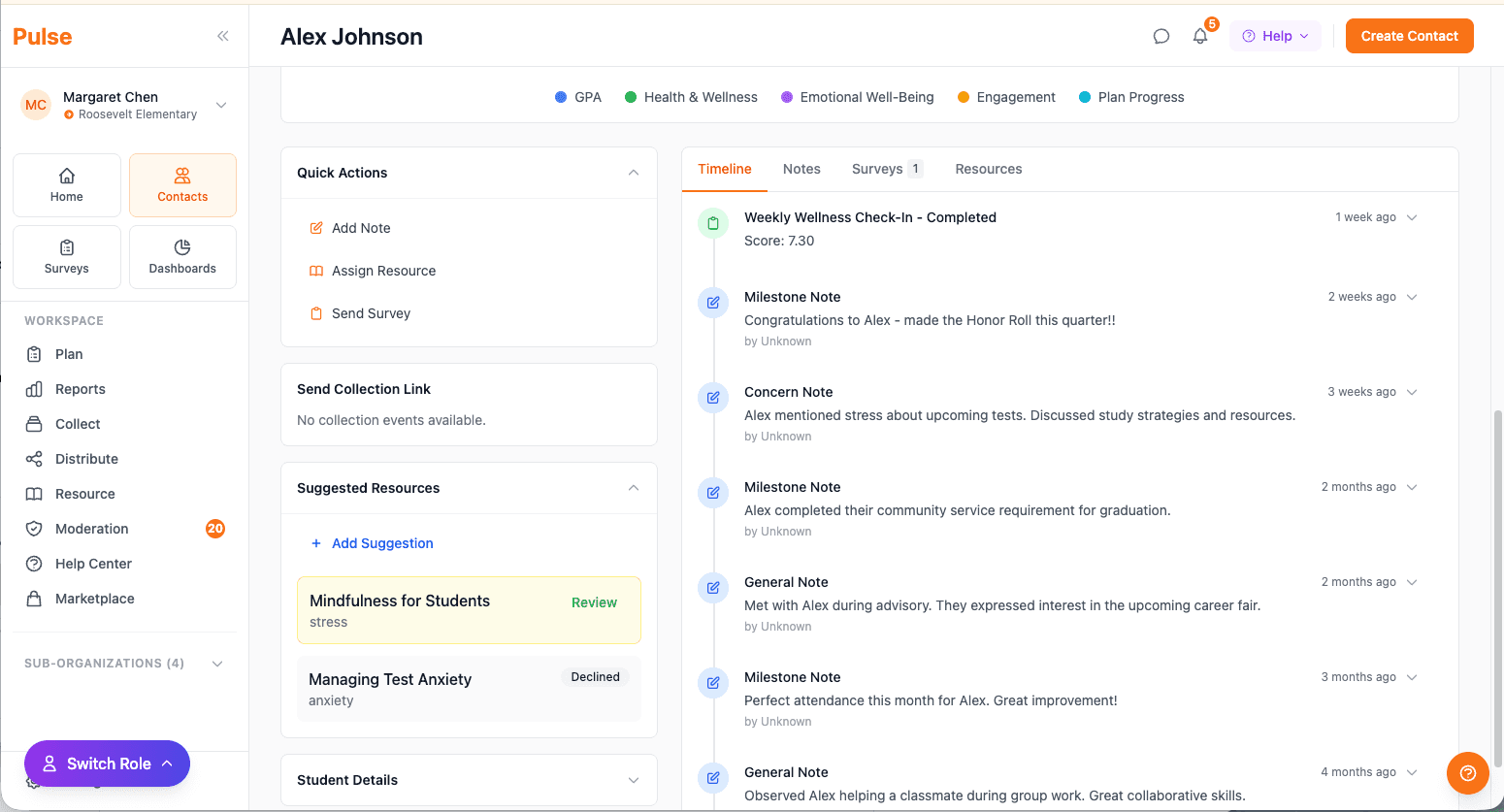
Student timeline view
What changed
Field teams started making real decisions with real data. Not guessing. Not relying on whoever happened to be in the room remembering what happened six months ago. The longitudinal view changed how teams thought about their work. They could see patterns. They could see what was actually working over time versus what just felt busy.
Organizations stopped measuring outputs and started tracking outcomes. That shift alone changed everything about how they allocated resources. When you can see what is actually driving change, you stop spreading effort thin across programs that look active but produce nothing lasting.
The question stopped being “how many people did we serve?” and became “what actually changed for the people we served?”
Who this serves
Social impact organizations drowning in data they cannot use. Nonprofits whose reporting exists for donors but not for the people doing the work. Any organization that knows it is measuring the wrong things but does not have the infrastructure to measure the right ones.
If your organization is sitting on data it cannot use, or building reports that never reach the people who need them, I would like to hear about it.
Where to go