Exponent Group
Henri Nouwen wrote that the spiritual life moves from solitude to community to ministry. In that order. Not negotiable. I built an organization around that conviction. Formation, equipping, and community restoration were never meant to be separated. We stopped separating them.
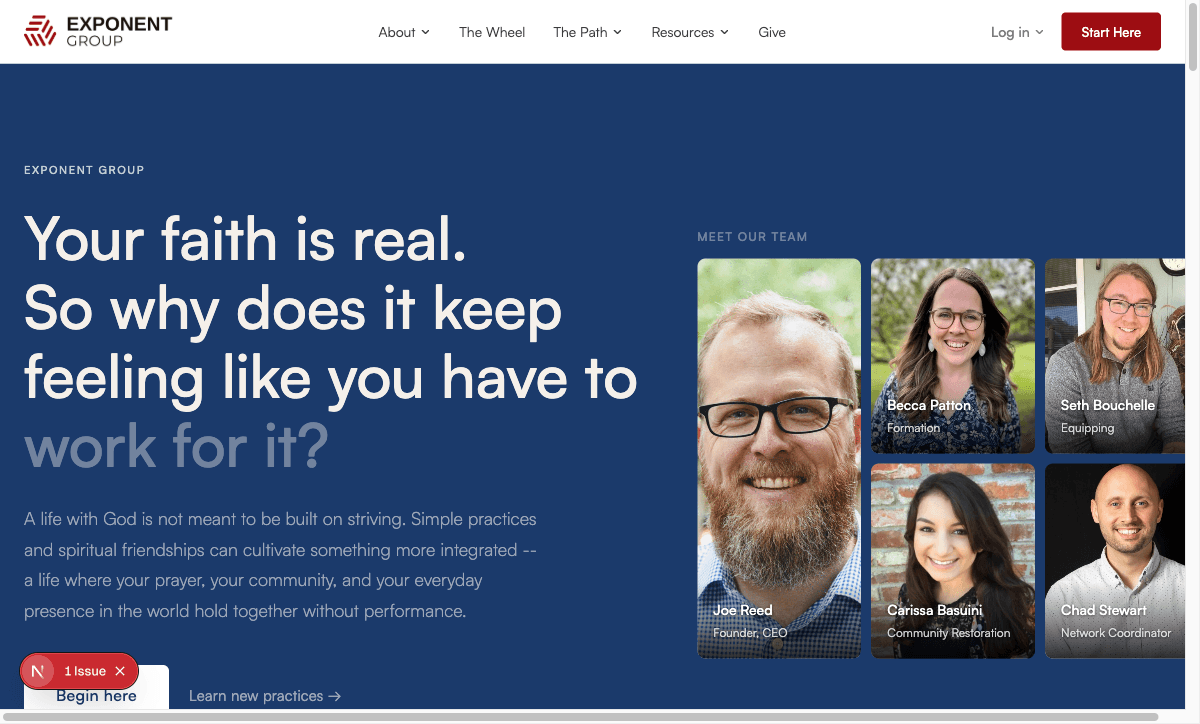
Exponent Group website
What I walked into
Three worlds that should have been one.
Leaders devoted to spiritual formation often had no meaningful conversations with people outside their tradition. They went deep, but they went deep alone. Ministry-skills leaders could organize, mobilize, and execute, but many of them carried thin prayer lives. They could build programs. They could not sustain themselves. Community restoration workers had the compassion and the proximity, but often lacked the interior practices needed for the long haul. Burnout was the norm, not the exception.
Formation, equipping, and restoration were almost always offered as separate programs. Separate tracks. Separate organizations. That bifurcation was the whole problem.
What I saw
Henri Nouwen laid the architecture out in 1995. His essay “From Solitude to Community to Ministry” in Leadership Magazine gave me the framework I had been looking for. Solitude first. Then community. Then ministry. The order is the architecture.
We turned that into a wheel. The Hub is life in God. Solitude. The interior life that everything else rests on. The Spokes are spiritual friendship. Real community, not programming. The Rim is participation in the world. Ministry, service, restoration. The wheel does not turn if any piece is missing.
The movement from solitude to community to ministry is not a way of being relevant to the burning issues of our time. It is the way of being relevant.
George G. Hunter III's work on Patrick of Ireland became a secondary influence. Patrick built communities of belonging before belief. He did not try to convert people and then invite them in. He invited people in and let the community do the work. That sequence mattered to me. It still does.
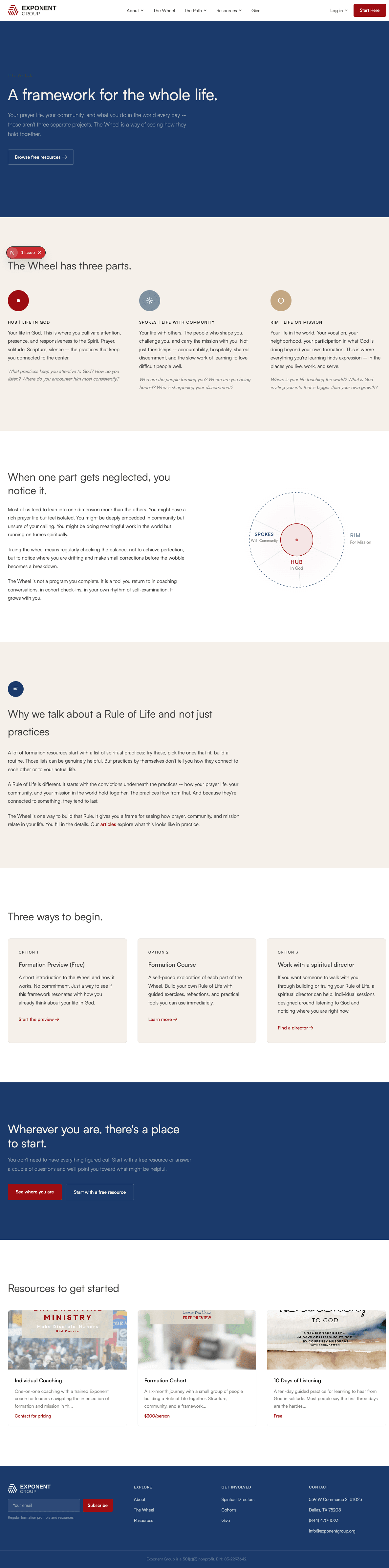
The Wheel framework
How I approached it
Cohorts became the primary vehicle. Not a curriculum to master. Not a rigid sequence. A cohort is a group of people walking through a shared process together, over time, with real accountability and real presence.
We built three tracks. Spiritual formation cohorts for the interior life. Ministry skills cohorts for equipping. Community development cohorts for restoration work. But the vision was never three separate programs running in parallel. The vision was integration. One person, over time, moving through all three dimensions until their inner life, their competence, and their impact are woven into a single fabric.
The people in these cohorts are not professional missionaries. They are everyday people. Where they live, work, and play. A teacher in Lagos. A business owner in Louisville. A social worker in Nairobi. The assumption was always that formation happens in ordinary life, not in spite of it.
Hub: Life in God
The interior life. Solitude, prayer, self-awareness. Everything starts here. Without a hub the wheel has nothing to turn around.
Spokes: Spiritual Friendship
Real community. Not small group programming. People who know you, challenge you, and stay. The spokes hold the structure together under pressure.
Rim: Participation in the World
Ministry, service, restoration. The part that touches the ground. Without the hub and spokes, the rim cracks under weight. With them, it rolls.
What we built
A 501(c)(3) with cohorts running across 12 countries. Local clusters anchored in partner churches and community organizations. A network of over 500 leaders who have been equipped through the framework. More than 40 partner churches carrying the model forward in their own contexts.
The regional vision is expansion through local clusters. Not a central office pushing programming outward. Local leaders trained in the framework, running cohorts in their own communities, adapting the language while keeping the architecture intact.
Depth that generates expansion. That is what an exponent does.

Community in action
What changed
Formation people learned to serve. They came in with deep inner lives and shallow engagement with the world around them. The cohort process moved them outward without abandoning what made them strong.
Ministry people learned to pray. They came in with full calendars and empty wells. The cohort process gave them permission to slow down before they burned out. Some of them said it was the first time anyone in a ministry context told them their interior life mattered more than their output.
Community restoration workers found a framework that could hold them. The long haul of restoration work breaks people who do not have roots. The wheel gave them roots.
Formation, equipping, and community restoration were never meant to be separated. We just stopped separating them.
Who this serves
Church leaders who sense the fragmentation in their programming. Nonprofit directors trying to equip people for community work without burning them out. Anyone building in the faith and development space who knows something is missing but cannot name what it is. The thing that is missing is integration.
If you are building something that integrates formation, equipping, and community impact, I would like to hear about it.
Where to go